Anyone who has tried to apply sunscreen to a moving child’s face knows that the product was never really the problem, the packaging was, and that is exactly the insight that makes Klarina’s Sunscreen and Blender by Tomorrow Lab one of the most thoughtfully designed objects.
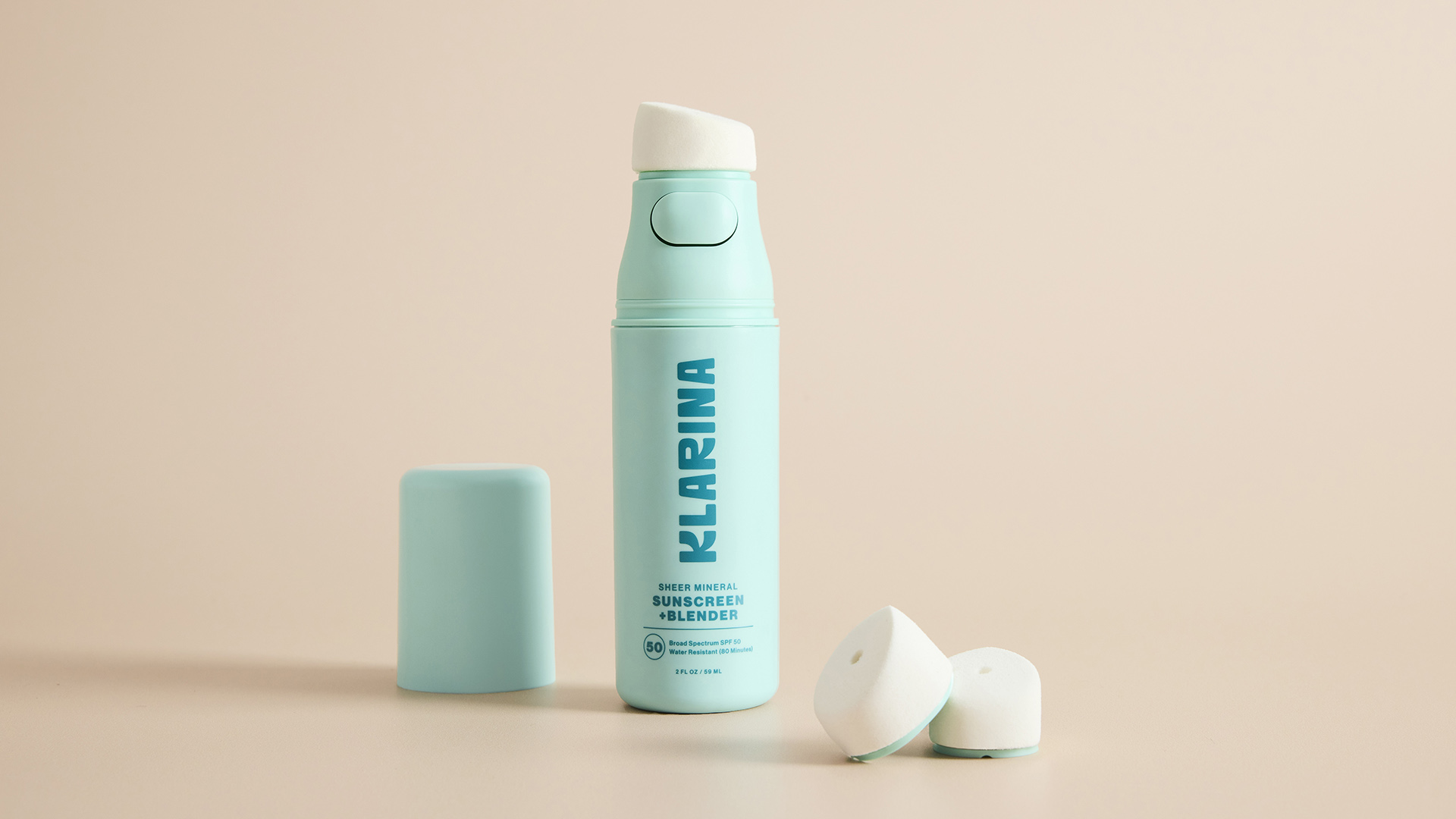
The product itself is a completely new category of object, an airless pump bottle with a built-in cushiony foam blender that dispenses mineral SPF 50 from any angle with one hand, solving the very specific and very real problem of getting sunscreen onto a squirming toddler’s face without a full production number.
Tomorrow Lab has treated a sunscreen bottle like a tool worth designing properly. The most powerful design brief is often just looking at the “why” behind the problem. Why do kids hate sunscreen? Because it’s a cold, sensory overload. This fixes exactly that.

Klarina came to Tomorrow Lab with a vision to solve a problem every parent knows too well: the daily struggle of applying sunscreen to unwilling children. Founder Hannah White identified that the issue wasn’t parental care or ingredient quality – mineral sunscreen is widely trusted by parents – it was that the products themselves made proper application nearly impossible, especially on tricky, sensitive areas like the face. Together, we set out to create a tool that would transform sunscreen from a dreaded battle into a manageable routine.
Through the industrial design process, we explored a wide variety of form factors, casting custom urethane foam sponges and 3D printing valves and locking mechanisms to test each direction. We thought deeply about how parents and kids would actually hold and use the device. Every component was positioned around the hand to eliminate fumbling. The button can be pressed easily with the thumb or forefinger. The weight of the package is balanced on the top of the hand. The blender is positioned exactly like a brush.

We integrated a fast-blending, sheer mineral SPF 50 lotion with an airless pump bottle that allows for one-handed dispensing from any angle. The built-in, specially shaped (and easily replaceable) cushiony-soft foam blender enables precise application and completely eliminates the need for hands to spread and rub in sunscreen. The airless pump bottle design avoids contamination and ensures that every drop of valuable product can be dispensed. At every stage, we worked closely with our manufacturing partners to bring the design from rough 3D printed prototypes to a refined final product without compromising on style or usability.
The feedback from families surprised even Hannah. Parents told us their two-year-olds started asking for “the soft sunscreen” and that kids as young as five could blend it in themselves.

While Klarina was intentionally designed to feel gentle on kids’ sensitive faces and improve their sensory experience, the extent to which it improved emotions and behavior was remarkable. Parents told us sunscreen finally stopped feeling like a battle and started feeling like a manageable routine.
The Klarina system proves that when you integrate formula, packaging, and user experience from day one, you create something that works in the real world. It’s a tool designed for the realities of family life, transforming a daily frustration into a moment of care.