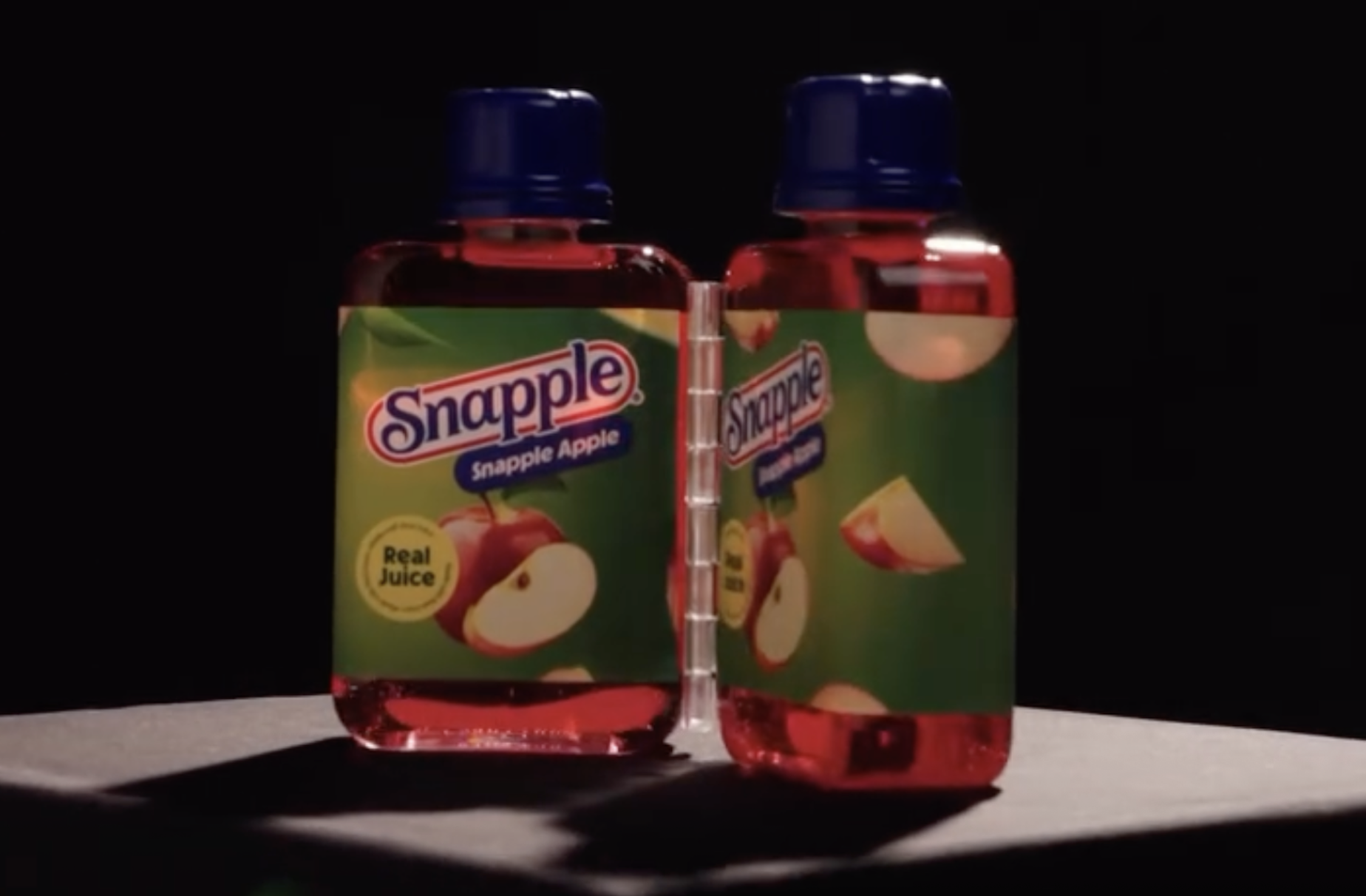
- Inspired by the launch of the Apple iPhone Duo, Snapple posted a parody on Instagram, announcing the foldable Apple Snapple.
- The video, starring comedian James Austin Johnson, pokes fun at tech presentations with a faux pair of Snapple bottles held together with a hinge.
Recently, Apple released its first foldable smartphone, called the iPhone Duo. Foldable phones have been around since 2018, but in typical Apple fashion, the Cupertino tech giant took its time polishing and refining the format (though maybe they needed to spend some more time making it durable for real-world use) before adding it to its lineup.
Like other major Apple releases, the iPhone Duo garnered a lot of attention, including parody. One example is Keurig Dr Pepper’s Snapple, which posted a video of the “foldable Snapple Apple” recently on Instagram.

The Reel, starring SNL’s James Austin Johnson, mimics tech announcements and features a faux dual bottle with two labels and a hinge. Johnson passionately describes useless features of the foldable Snapple Apple, like the identical labels and “more spouts than necessary.” The hinge both opens…and closes. The spoof closes with Johnson proclaiming, “They said we couldn’t do it,” followed by an excited “Yes!” as he pulls in a fist. Though it’s an obvious parody playing on the iPhone Duo launch, the last words in the reel are “drops never.” So don’t expect to see a real foldable Snapple Apple in person, not even via a giveaway.
While it’s a fun spoof that pokes fun at Apple’s new $2,000 (!) phone, Snapple fans would be more excited to see glass bottles in stores than a fake hinged double bottle on social media.

Still, I commend the brand for fully committing to the bit, going so far as to create a one-of-one physical “foldable” bottle instead of generating an AI slop video. It’s nice to see brands make the effort, even if it’s just for social media, rather than using the short lifespan and limited attention span as justification for AI-generated, low-effort content.