COLLINS Helps Target Transform House Brand Up&Up Into More Than Just a Bargain Buy
By
Published
Filed under

By
Published
Filed under
When Target debuted its bargain sub-brand dealworthy last year, it provided an opportunity to move their other private label brand up&up, well, up. Of course, a no-frills look for both house brands wouldn’t work, as it would likely confuse shoppers as they peruse everyday items like paper towels and shampoo.
When mega-retailer Target set out to give up&up a redesign, it turned to Collins for help. With over 2,000 SKUs across wildly disparate categories, from diapers and nicotine patches to kitty litter and garbage bags, creating a unified brand identity is no easy task, to be sure. “Working with the great team at Target, we set out to rethink what value really means—not just in terms of cost, but how a product fits into people’s daily lives,” says Brian Collins, co-founder of Collins.
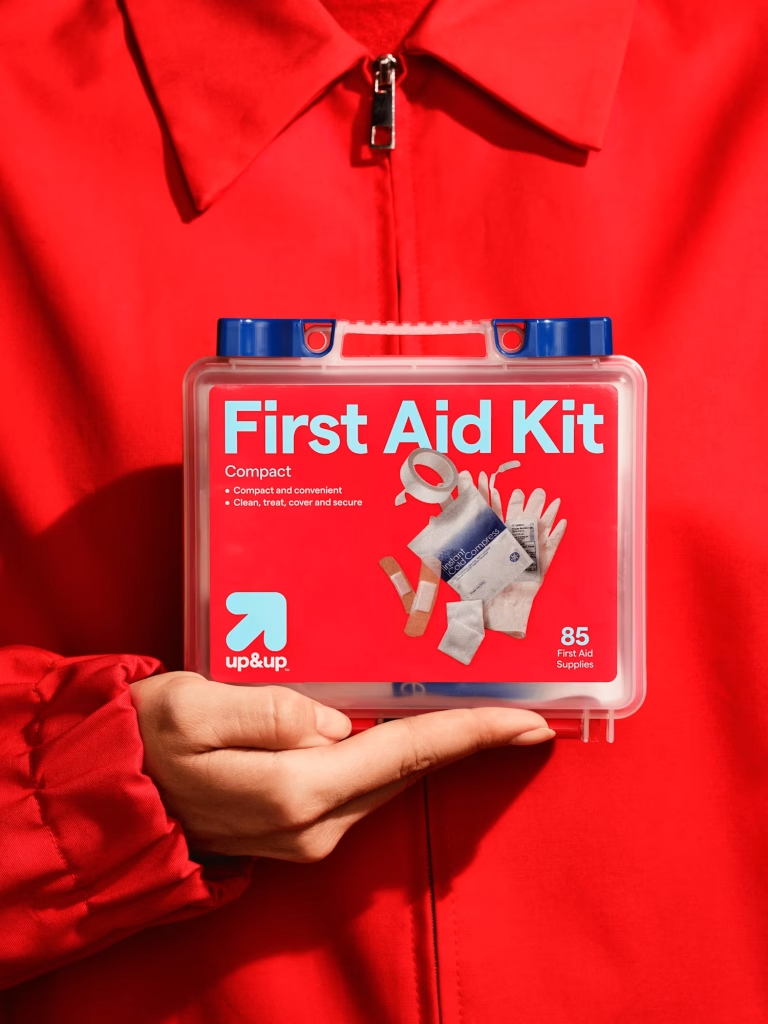

“Too often, value brands focus entirely on the transaction: bold, discount-driven packaging that screams from the shelf, ‘buy me!’” he adds. “But once those products make it home, they tend to vanish—not because they’re used up, but because they just don’t belong there. Their screeching visuals means they get stuffed into cabinets, hidden behind doors, and pushed out of sight.”

Up&up’s new look, which Collins describes as “a full brand and product transformation,” slightly tweaks the upward-pointing arrow logo by removing the “up&up” wordmark and placing it below. Target’s house brand also gets bold splashes of color and eye-catching photography throughout. Product names, meanwhile, are emblazoned on the front of the packaging in an assertive font.


“This isn’t just about aesthetics. It’s about broadening the definition of value—proving that affordability and high quality shouldn’t be at odds,” Collins says. “A product that looks great enough to leave on your kitchen counter that feels natural in the flow of your family’s week, has a different kind of worth. It’s something you prefer, not something you pick just because of a great price. And if we’ve done our job right, up&up doesn’t just make shopping better—it makes living with this brand better, too. Even joyful. Because value, real value, isn’t just about what something costs. It’s about what it adds to your life.”


According to Target, the up&up revamp also included a reduction in plastic and improvements in packaging based on consultation with occupational therapists. However, information surrounding the brand’s update left few details. Still, it’s nice to see Target at least doing something (though we don’t know how much) to reduce plastic waste and make packaging easier to use. We reached out to Target for specifics on decreasing its plastic footprint but have yet to hear back, so I suppose we’ll have to take their word for it.
Target debuted the new up&up look and packaging system about a year ago, though with thousands of items receiving an update, we’re likely hearing about Collins’ design work on it now because it was still a work-in-progress through 2024 into 2025, and Target was adding more SKUs to the line simultaneously.

Up&up’s branding upgrade was announced slightly before my retailers CVS and Walmart unveiled their own private label updates to make them more appealing to consumers. These moves came as the public started to feel the pinch of inflation, shrinkflation, and, now, incoming tariffs on goods from America’s three largest trading partners, Canada, China, and Mexico.
In the current economy, consumers need to stretch their dollars as far as they can, and it doesn’t appear that the Trump administration 2.0 is going to make good on his promise of making groceries like eggs cheaper just yet. Up&up’s offerings are between 10-30% cheaper than national brands, according to Collins. For Target, up&up generates $3 billion in sales annually, so making it stand out with exceptional packaging makes plenty of sense.