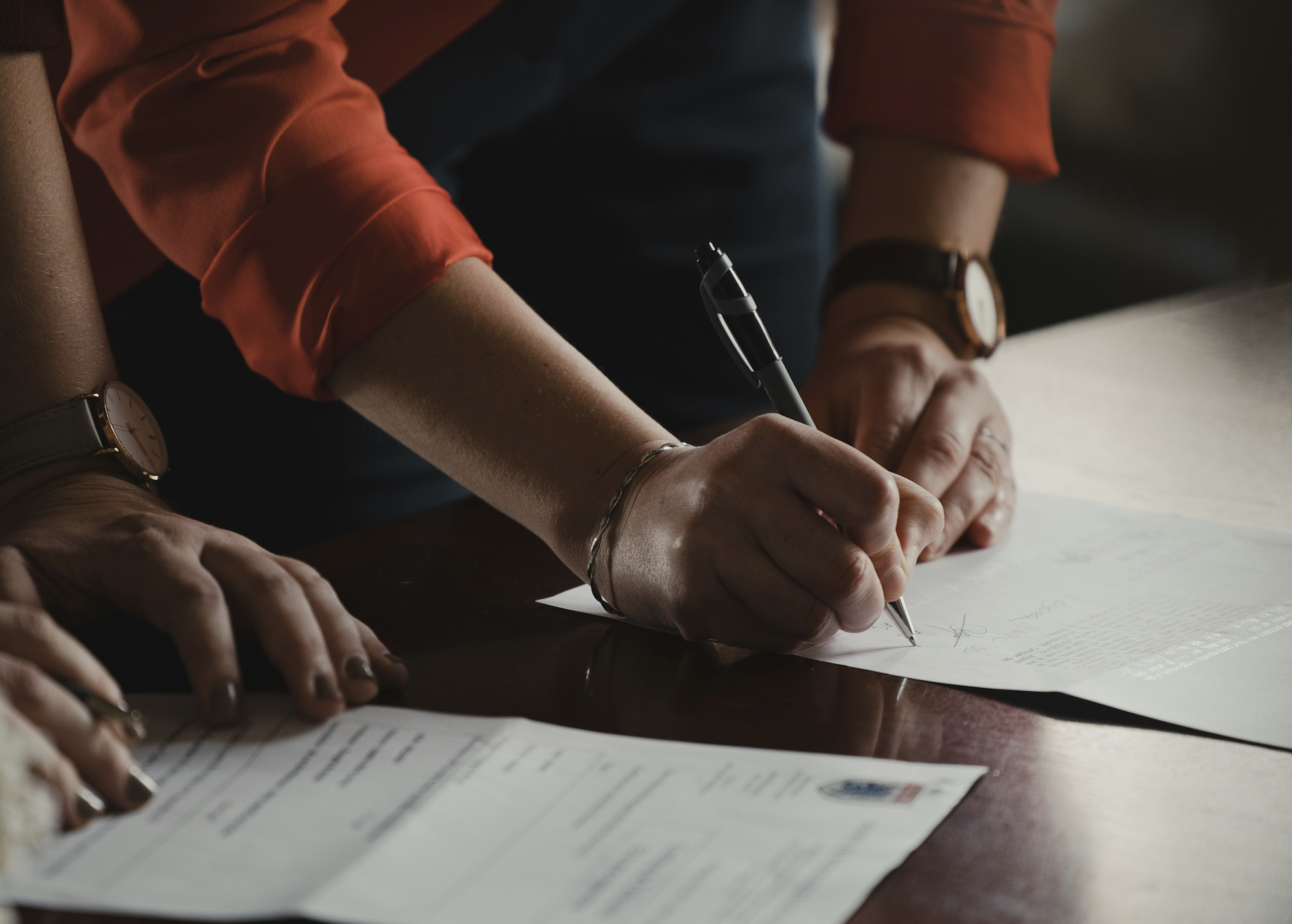
- Designers Timothy Goodman and Jessica Hische have added generative AI clauses to their client contracts and encourage other creatives to do so too
- Goodman and Hische share the content of their own generative AI clauses and why such measures are so important for artists right now
While the interference of AI in our lives and livelihoods has been creeping up on us for years, it certainly feels like 2026 is when it reached a fever pitch. AI is everywhere, touching virtually everyone and everything in some capacity, and, to be perfectly honest, it’s scary as hell.
Here at DIELINE, we have a vested interest in exploring how AI is impacting branding and packaging design spaces specifically, and have recently clocked how some big-time designers we admire are advocating for artists to add generative AI clauses to their contracts as a critical means of creative protection in these increasingly sinister times. Designer, illustrator, and muralist Timothy Goodman and lettering artist, illustrator, and type designer Jessica Hische are two such luminaries who have each spoken out about the need for artists to take these direct, preemptive measures against AI.
“Recently, I’ve had two different agencies come to me with AI mockups of my own art, made using Claude and Gemini. They literally sent me the work, apologized for ‘bastardizing’ my art, and then proceeded to not hire me,” says Goodman. “They want my work, my style, my ideas, but apparently they don’t need me.”
Goodman shares that he’s also had people at massive brands openly tell him they want to save money by not hiring artists in the future. “Some are already taking work that independent artists and design agencies have created for them, and using it to train their own AI models,” he says. “For years, brands have hired artists because they want our distinct visual language, our ideas, our personalities. Now some of those same companies are figuring out how to extract all of that from the people who created it. This isn’t some hypothetical conversation about the future of creativity. It’s happening right now. And that’s why I’m beginning to put these protections into my contracts.”
Hische hasn’t yet experienced the same level of direct conflict with clients wanting to train her work on AI models, but she is still well aware of the dangers of clients doing so and is keen to act before a real incident comes up. She credits not having experienced it yet to the fact that most of her client work right now is logo work.
“I decided to start including the AI clause in my proposals just to make sure it was clear that if that’s something that clients need/want, it would be a separate discussion and involve a different fee structure,” she says. She adds that it’s similar to how her pricing changes for work as a rights-managed license versus copyright transfer.
Hische recently shared the exact verbiage of the generative AI clause she’s added to her client contracts on Threads, encouraging others to do the same and use her version as a jumping-off point for their own.

“So far, I’ve had no pushback from clients,” she says about the AI clause in her contracts. “Any pushback has been from folks who aren’t my clients, reading the clause too strictly.”
Meanwhile, Goodman says he’s still developing the exact language for his own generative AI clause, but the idea is simple: “Hiring me to create artwork doesn’t give a company the right to use that artwork to train AI models or generate endless imitations of my work without me. I’m not trying to prevent someone from using Photoshop to resize an image. I’m trying to prevent someone from taking 20 years of my creative development and turning it into a machine that no longer needs me.”
He says the language will state that the work he creates may not be used to train, fine-tune, or develop generative AI models, or used as input, reference material, or prompts to generate new artwork, variations, extensions, or derivative designs.
When asked what dangers freelancers could face if they don’t put measures in place to protect themselves and their work, Goodman says artists are unknowingly helping build the very systems that could replace them. “You spend years developing a distinct visual language. You build a career around your ideas, instincts, mistakes, and lived experiences. Then a corporation hires you, takes your work, and potentially uses it to generate endless variations without ever needing to call you again. And most freelancers don’t have lawyers reviewing every contract or the resources to challenge unauthorized uses of their work.”
“But this goes beyond copyright. It’s about the devaluing of creative labor itself,” he adds. “The conversation shifts from ‘What is this artist’s unique perspective worth?’ to ‘Why should we pay this artist when we can make something similar ourselves?’”

As you can see in the text of Hische’s clause shared above, she’s also addressing the rise of clients using AI agents to communicate with designers and even provide feedback on their work. “The part of the clause that prohibits written communication from agents is because I’ve seen a lot of designers starting to get feedback that was directly generated from an agent instead of by their client,” she says. “Multiple friends have mentioned that clients uploaded the work to GPT and asked it to give feedback, and the client passed that feedback directly to the artist (some of which they hadn’t even read or agreed with in the end).”
The dystopia is coming from inside the reality, folks!
“One of the important parts of a client relationship is knowing who all the stakeholders are that will be voicing approval and feedback. Asking an agent to do that for you is not only lazy and disrespectful—it’s outsourcing decision-making to an entity that doesn’t have a complete picture of the project, work, artist, or business,” Hische elaborates. “The clause isn’t meant to disallow AI as a part of the client’s administrative stack, it’s to prevent them from including an AI agent as a decision-making partner in the approval/review process, outsourcing their own role to a robot.”
Goodman says he hasn’t knowingly dealt directly with an autonomous AI agent managing a client relationship yet, “but the fact that we’re even having this conversation is pretty depressing to me.”
“For me, making art has always been about human connection. Even commercially, the best projects come from conversations, disagreements, unexpected ideas, and the back-and-forth between people with different perspectives,” he goes on. “Now imagine receiving an AI-generated brief, responding to AI-generated feedback, and making revisions based on decisions filtered through another AI system. At what point does the creative process stop being a collaboration and become a transaction between machines?”
While right now it’s adding generative AI clauses to client contracts, there will, of course, always be new protective measures creatives will need to take and hoops to jump through as our society continues to amble along this sloppy path. Goodman has some advice for creatives on additional ways to continue to protect themselves:
“Ask questions! Where is your artwork going? Who has access to it? Can it be used to generate future work? What happens to rejected concepts and sketches? We need to start treating AI usage rights as seriously as licensing, ownership, and compensation. Second, talk to other artists. Share resources, compare contracts, and push for better industry standards. We can’t expect every independent artist to negotiate these issues alone against billion-dollar companies. Over the last few decades, artists have become increasingly dependent on the very brands, corporations, and platforms that now have the power to replace us.”
“And don’t be afraid,” he adds. “I’ve been thinking a lot about what it means to be an artist who reflects the times when the systems that allow us to have a career also make us afraid to speak about them. We can’t become so dependent on corporate approval that we’re afraid to defend our own livelihoods. This isn’t just about technology. It’s about labor, power, authorship, and what kind of creative culture we want to live in.”
Hero image by Romain Ducre.